When I stepped back and looked at our organization in 2019, I saw a hard truth.
Many of our managers were in leadership roles for the wrong reasons. They were there because they had been here the longest. Because they knew the department better than anyone else. Because they thought they could earn more. Or because they had a good relationship with the person who promoted them.
What they were less likely promoted for was leadership skill.
That distinction matters more than most industrial companies realize.
In manufacturing, we tend to reward technical competence. If someone is the best machinist, fabricator, engineer, or technician, the natural progression is to make them the supervisor.
But leadership and technical skill are not the same thing.
When you promote someone for tenure or expertise without equipping them to lead, a few predictable things happen:
Most people’s example of leadership come from parents, teachers, or coaches. That model often relies on authority, discipline, and control. That approach can create short-term compliance. It rarely creates long-term performance.
Over time, we felt the consequences. Some departments had higher regrettable resignations. Cross-organizational collaboration was weaker than it should have been. People didn’t always feel seen, coached, or developed.
That is when we made a decision: if we were serious about building a durable industrial company, leadership could no longer be accidental.
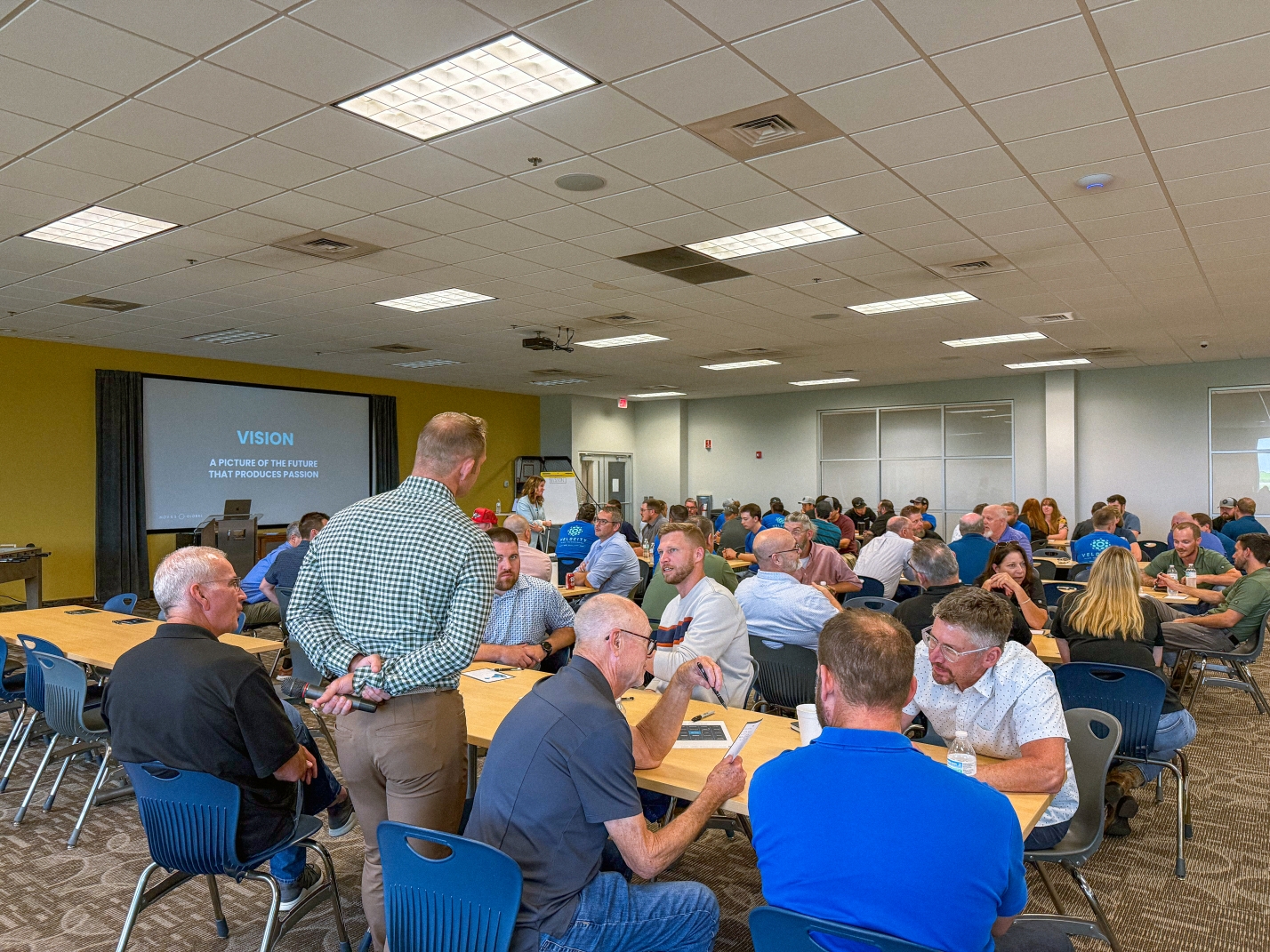
The Leadership Academy was created to professionalize leadership inside our organization.
The objective was simple: Leadership is not a title. It is a skillset.
We focused on shifting the mindset from command-and-control to mentor-and-coach.
Our leaders are expected to:
We aligned the Academy with our Leadership Compass framework, emphasizing communication style, strengths awareness, and emotional intelligence. We implemented Management by Strengths (MBS) so leaders understand how their team members process information, make decisions, and respond to feedback. We reinforced this with pulse surveys that give team members a voice and provide real data on engagement and communication effectiveness.
The goal was not theory. The goal was cultural infrastructure.
Because here is the reality: if leadership capability is weak, no compensation structure, no process improvement, and no career program will fix turnover.
Which brings me to the second realization.
Around the same time, I began sitting through onboarding sessions.
I listened carefully to how managers described roles to new hires. I asked myself a simple question:
“If I were 22 years old and just joined this company, would I clearly understand what my future could look like here?”
The answer was no.
We had opportunity. We had upward mobility. But we did not have clarity.
And the data showed it.
Our highest resignation rates came from team members in the three-to-five-year range. Not brand-new hires. Not 20-year veterans. It was the middle group — the people who had proven themselves but could not clearly see what was next.
That is a leadership failure, not an employee failure.
So we built Launchpad.
Launchpad was designed by department managers, not imposed from the top down.
The objective was to create:
We built a five-level framework:
A new team member must demonstrate our core values while learning the most basic departmental skills.
After six months of proving both cultural alignment and skill progression, they become eligible for promotion to Tech 2 with a raise.
The next six months are spent building measurable competency in outlined departmental skills.
At 12 months from hire, they are eligible for promotion to Tech 3.
This level reflects solid technical capability and consistency.
Advancement requires demonstrated performance, quality, and reliability.
To achieve Tech 4, the team member must expand their skillset further and meet defined utilization and output benchmarks. Performance is measured, not assumed.
Master Tech is the highest technical level in the department.
This individual:
It is the highest paying level within the department.
Compensation is transparent and structured.
Wages are:
We also implemented tenure-based increases at 5, 10, 15, and 20 years of service. A 15-year team member should not earn the same wage as a three-year employee performing at the same technical level. Loyalty and contribution over time matter.
Transparency eliminates the off-hours speculation about pay. It creates clarity and objective fairness. When expectations are clear, performance improves.
But there is a critical principle here.
Launchpad only works because Leadership Academy came first.
You cannot build a career path on top of weak leadership.
If managers do not know how to coach, hold standards, and develop people, a structured promotion program becomes a checklist exercise. Worse, it becomes political.
The sequence matters.
That is the “cart before the horse” issue many organizations miss.
From the outside, these programs might look like HR initiatives.
They are not.
They are operational infrastructure.
They impact:
A company that can systematically develop leaders and clearly advance technical talent is a company that can grow without losing itself.
It is also a company that can integrate new teams, expand into new markets, and absorb complexity without cultural erosion.
Leadership capability and career clarity are not soft initiatives. They are structural decisions that determine whether a business plateaus or compounds.
At Velocity, we made a deliberate choice:
Execution still matters. Output still matters. Results still matter.
But the way you develop the people who produce those results matters just as much.
Because long-term value is built by people who know where they are going and are led by someone who knows how to help them get there. This type of workplace ecosystem can translate into durable success, not only for the company, but the team that drives it. At the end of the day, we are all in this together!